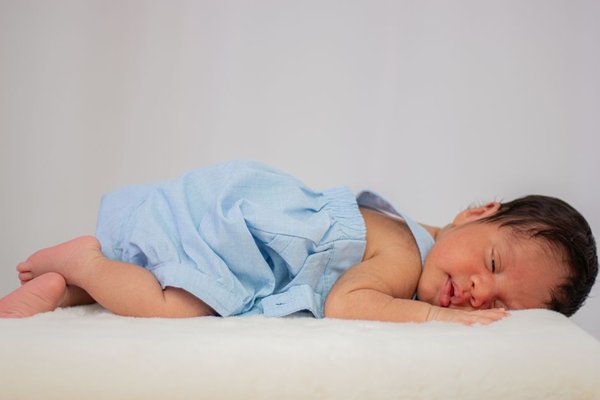
The most memorable newborn photographs often happen between planned moments: a sleepy stretch, a tiny hand around a parent’s finger, or a curious look toward the window. You do not need elaborate props or complicated studio positions to capture them. The best safe newborn photo posing tips begin with one principle: a pose that looks beautiful on camera is not necessarily safe for a baby.
At home, choose natural positions your newborn already finds comfortable. Keep an adult close, support the head and neck, and let your camera angle do more work than the posing.
Put safety ahead of the photograph
Newborns cannot reliably control their heads or move themselves out of uncomfortable positions. Before every photograph, check that the nose and mouth are unobstructed, the chin is not pressed toward the chest, and the body is supported. Never stretch limbs into a position or expect a baby to hold up their own head.
Have one alert adult responsible for the baby throughout the session. That person should not be distracted by decorations or camera settings. If you are taking pictures alone, keep the setup extremely simple and never leave the baby unattended to retrieve equipment.
Keep safe-sleep rules in place
For sleeping photographs, the American Academy of Pediatrics recommends the same conditions as any other sleep: a baby on their back in a firm, flat, noninclined crib or bassinet with a fitted sheet and no loose blankets, pillows, toys, or soft props. Neither side-lying nor tummy sleeping is an appropriate photo alternative.
Couches, adult beds, padded nests, and decorative baskets are not safe infant sleep surfaces, even with a nearby adult. If your baby falls asleep during a held portrait, transfer them to their own safe sleep space when appropriate. Newborn photo safety does not change because a camera is present.
Prepare the space before bringing baby into frame
Choose soft window light without direct sun on the baby’s face. Move cords, hot lamps, unstable stands, and clutter out of the area. Set your camera within reach, and use normal, comfortable room conditions rather than overheating the room for an unclothed photograph.
Plan a few brief photo opportunities instead of a marathon session. A fed, changed, settled baby is usually easier to photograph, but never postpone feeding or comfort for a picture. Keep an extra outfit nearby and be willing to stop after one good frame.
Four gentle positions to photograph at home
A natural back-lying bassinet portrait
Leave the bassinet empty except for the fitted sheet and photograph your baby lying on their back. From the side, you can capture a peaceful profile or hands resting near the face. Avoid reaching directly over the baby with a heavy camera; use a strap and keep your stance secure. Cropping creates intimacy without extra bedding.
A fully supported cuddle
Have another adult take the picture as you cradle your newborn in a familiar, comfortable hold. Sit securely with both feet on the floor, supporting the head and neck throughout. A close photograph of your baby’s face next to yours can be more personal than any elaborate pose.
Hands, feet, and other tiny details
Some of the safest baby photo poses are simply everyday movements. While an adult holds the newborn securely, photograph toes, fingers, hair, or a relaxed hand. Wait for a natural stretch rather than pulling arms beneath the chin. Use several quick frames to catch an expression without manipulating the body.
Awake moments at floor level
For an alert baby, a clean, firm floor-level surface allows a simple on-the-back portrait with an adult beside them. Short, closely supervised tummy time may also offer a candid picture if the baby is awake and content. Tummy time is for play, never sleep; do not force the neck upward or continue when the baby becomes drowsy.
Know which popular poses to skip
Images of newborns apparently resting their chin on their hands, sitting unsupported, hanging in fabric, or balancing inside buckets can hide significant safety precautions. Some professional photographs are composites assembled from multiple frames while assistants continuously support the baby. The final image does not reveal what was removed during editing.
Do not recreate these positions at home. Avoid elevated platforms, unstable containers, suspended props, tight wrapping, or positions that put pressure on the baby’s neck and joints. Siblings and pets should never be relied upon to support a newborn. An adult can hold the baby while family members sit nearby.
Watch for discomfort and stop promptly
Pause when your baby cries, stiffens, grimaces, becomes too warm or cold, or repeatedly turns away. Check feeding, changing, and rest needs before trying another image. Baby photography safety includes accepting that the session may be finished before your planned shots are taken.
If breathing seems difficult, the lips or skin turn blue or gray, or the baby is unusually unresponsive, stop and seek urgent medical assistance. Babies with medical concerns, including those born prematurely, may need individualized guidance from their clinician.
Change the angle instead of moving the baby
A few camera adjustments often achieve the look parents want without extra posing. Move yourself toward the window, lower your camera to the baby’s eye level, or crop tightly around a naturally curled hand. Keep equipment secure and avoid dangling accessories over the face.
Imagine your newborn asleep on their back in an empty bassinet. Instead of adding a pillow to lift the head, take a side-angle photograph with soft daylight on one cheek. Step back for a second frame showing how small your baby looks in the cot. Both pictures preserve the safe sleep setting.
For future sessions, a simple photo checklist, natural-light newborn photography techniques, and monthly baby milestone photos can help you document changes without elaborate setups.
Frequently asked questions
Can I photograph my newborn while they sleep?
Yes. Leave the baby on their back in their own safe, firm, flat, uncluttered sleep space. Do not add supports, pillows, or toys for styling.
Is side-lying safe for a newborn photograph?
Do not place a sleeping newborn on their side. They may roll onto their stomach. A back-lying picture or fully supported cuddle is a better choice.
Do I need a professional photographer?
No. Simple family photographs work well with a phone and supported positions. Complex studio poses require specialized skills and should not be copied from finished images.
How long should the session last?
Follow your baby’s comfort rather than a timer. Several short, peaceful moments are usually preferable to a prolonged session. Stop for feeding, changing, or rest whenever needed.
Let the photograph fit your baby
Good newborn posing at home means working with your baby’s natural movements, not trying to match a dramatic online image. A secure cuddle, a back-lying portrait, or a close-up of a tiny hand can become a family favorite. Keep the airway clear, the body supported, and the sleep environment safe. The photograph matters because the moment is real.