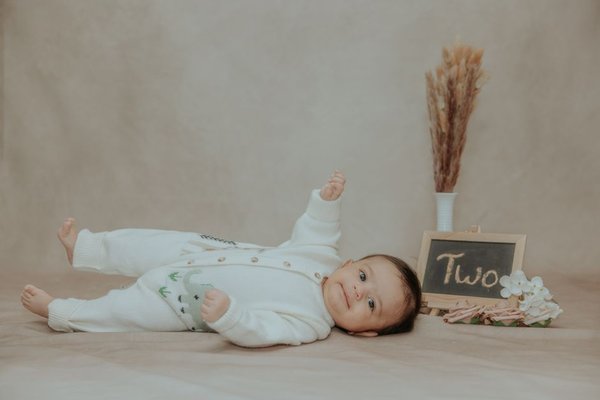
Buying baby clothes by age seems straightforward until a two-month-old outgrows a three-month outfit or a one-year-old still fits into nine-month pants. The label is a starting point, but babies grow at different rates, and clothing brands don’t all cut their garments alike. Begin with the age range, check your baby’s length and weight, and then consider how the item fits.
What Do Baby Clothing Age Labels Mean?
In many US collections, a label such as 3M generally means a size intended for approximately birth through three months, not exclusively for babies who are exactly three months old. Likewise, 6M commonly corresponds to roughly three to six months. Some brands print ranges such as 3–6M instead. Those labels can describe similar stages, but the actual measurements may differ.
Think of baby sizes by month as shopping shortcuts rather than developmental milestones. A baby’s age cannot tell you whether a sleeper has enough room in the legs or whether a bodysuit will close comfortably over a diaper.
Baby Clothing Age Chart: Common US Size Ranges
The measurements below illustrate one major US retailer’s sizing: Carter’s. They are not universal standards. Always compare them with the specific brand’s chart, especially when buying online.
Newborn (NB): Birth to About 1 Month
Carter’s newborn size is listed for approximately 6–9 pounds and 18–21.5 inches in length. Some babies skip newborn clothing, while smaller babies may wear it longer. If you’re shopping before delivery, keep newborn purchases modest and have a few 3M pieces available.
3M: Approximately 0–3 Months
The Carter’s 3M range covers about 9–12.5 pounds and 21.5–24 inches. Check shoulder seams, diaper room, and the length of one-piece outfits. A comfortable 3M bodysuit may last longer than a footed sleeper if your baby has long legs.
6M: Approximately 3–6 Months
This range is around 12.5–17 pounds and 24–27 inches in the Carter’s chart. Growth can make sleeves or footed pajamas feel short before the body of the garment becomes snug. Look for comfortable movement rather than waiting for the labeled age to arrive.
9M: Approximately 6–9 Months
The illustrated range is about 17–21 pounds and 27–28.5 inches. As babies begin sitting, scooting, or crawling, flexible waistbands and soft seams often matter more than decorative details. Check that pants stay in place without digging into the belly.
12M: Approximately 9–12 Months
Carter’s lists about 21–25 pounds and 28.5–30 inches for 12M. Your baby may still wear 9M in one brand and need 12M in another. Compare garment measurements rather than assuming every first-birthday outfit will fit.
18M: Approximately 12–18 Months
This size corresponds to roughly 25–28 pounds and 30–32 inches on that chart. Active toddlers need room to bend and squat, but excessively long pant legs can create a tripping hazard. Check length after washing, too.
24M: Approximately 18–24 Months
The listed range is approximately 28–30 pounds and 32–34 inches. Size 24M is not automatically identical to 2T: toddler lines can differ in diaper allowance, proportions, and styling. Compare both options when your child approaches the transition.
Month-by-Month Checkpoints for the First Year
For a quick infant clothes by age reference, consider these shopping checkpoints: month 0 often means newborn or 3M; months 1 and 2 commonly fall around 3M; and month 3 may be a transition between 3M and 6M. Months 4 and 5 often suggest checking 6M, while month 6 may prompt a comparison between 6M and 9M.
At months 7 and 8, many shoppers start with 9M. Month 9 is a time to compare 9M with 12M; months 10 and 11 often point toward 12M. Around month 12, check both 12M and 18M measurements. These are reminders to measure and try on clothing, not targets a baby must meet.
Between 13 and 18 months, start by checking 18M. From 19 to 24 months, compare 24M and 2T charts, particularly for pants. Keep your child’s current fit as the deciding factor throughout.
How to Choose a Size When Age and Measurements Disagree
First, use a recent weight and length measurement. For babies who cannot stand steadily, length is measured lying down; height charts for older children may use standing measurements. Compare both figures with the retailer’s chart. If your baby falls into different categories for weight and length, pay attention to the garment type.
For example, a baby who is 26 inches long and weighs 16 pounds falls within Carter’s illustrated 6M range for both measurements. But if a particular sleeper pulls at the toes, its leg length may be the limiting factor even though the number on the tag appears correct. Try the next size in that brand and assess the fit.
For more help between shopping trips, keep a note of your baby’s current measurements alongside the fit of two or three favorite outfits. This gives you a more useful record than age labels alone. A separate guide to measuring baby clothes can help when comparing product dimensions online.
Fit Checks That Matter More Than the Tag
Bodysuits should close without pulling at the crotch. Pants should stretch comfortably over a diaper and allow free kicking or crawling. Sleeves should not cover the hands unintentionally, and footed sleepers should leave space for toes without bunching dangerously around the feet.
Sleepwear deserves special attention. Follow the manufacturer’s fit guidance rather than automatically sizing far up. For safe sleep, the American Academy of Pediatrics recommends keeping loose blankets out of an infant’s sleep space and using appropriate clothing or a nonweighted wearable blanket when warmth is needed. Avoid overheating and stop using swaddles that restrict movement once a baby shows signs of rolling.
If you’re building a practical wardrobe, a newborn essentials checklist and a guide to baby sleepwear sizing can help you prioritize items that get worn often.
Frequently Asked Questions
Should I buy baby clothes based on age or weight?
Start with age to narrow your search, then use both weight and length to choose a size. Neither measurement alone guarantees fit, particularly for footed outfits and brands with different proportions.
What if my baby is between two sizes?
Compare the brand’s measurements and the garment’s purpose. A little growing room can be helpful for everyday play clothes, but clothing should not be so loose that it interferes with movement or creates a sleepwear safety concern.
Are 12M and 12–18M the same size?
Not necessarily. One brand may use 12M for a nine-to-twelve-month range, while another labels a separate twelve-to-eighteen-month size. Check the actual chart rather than treating the wording as interchangeable.
How often should I check my baby’s clothing size?
Reassess when clothes become tight at the diaper, short in the torso, restrictive around the shoulders, or cramped at the toes. Rapid early growth means the right time to size up may arrive well before the next birthday month.
Finding the Right Fit as Your Baby Grows
A baby clothing age chart is most useful as a starting map. Match the size label to your child’s current measurements, then check comfort, movement, and the garment’s design. That habit takes the guesswork out of changing baby size ranges and makes it easier to buy clothes your child can actually wear.