A cabinet full of plastic containers may be a nuisance when a toddler discovers it. A cabinet holding dishwasher detergent is a different story. That distinction is the starting point for babyproofing cabinets and drawers: secure the most dangerous contents first, then choose locks that suit each door, drawer, and daily routine.
Start With What Is Inside, Not the Number of Cabinets
Walk through your home at a crawling child’s eye level. Open every low cabinet and drawer, including those in rooms your baby rarely visits. Sort them by the consequences of getting inside, rather than how often you use them.
Lock These High-Risk Contents First
Medicines, vitamins, cleaning sprays, dishwasher and laundry detergents, pesticides, alcohol, sharp tools, matches, and lighters require secure storage. Button batteries and small magnets also deserve special attention because swallowing them can cause serious injury.
Keep medicines and household chemicals in their original containers, ideally high, out of sight, and behind a locked door or in a lockbox. A basic cabinet latch provides an extra barrier, but should not be the only protection for a potentially poisonous product. Child-resistant caps are not childproof.
Decide Which Spaces Can Stay Accessible
A low drawer containing large plastic bowls may be an acceptable supervised exploration space if it has no sharp edges, small detachable parts, or trapping hazards. Keeping one genuinely safe area accessible can make the kitchen less frustrating for everyone. Check its contents regularly; household members often add unexpected items.
Choose the Right Cabinet and Drawer Locks
The best cabinet locks for babies are those that fit the furniture securely and that adults will actually fasten every time. Consider the door configuration, clearance inside the cabinet, finish, and how frequently it opens.
Internal Latches
These catch behind a cabinet door or drawer front, usually allowing a small initial opening before an adult releases the catch. They can suit standard hinged doors and certain drawers, but that gap may allow little fingers to reach inside. Avoid them where a child could grab hazardous contents through the opening.
Magnetic Locks
Magnetic systems generally keep the front closed until an adult uses a matching key outside. They provide a discreet option for many flat-front cabinets and drawers, provided the lock is compatible with the material and thickness. Store the unlocking key securely out of children’s reach, and check that the lock engages after each use.
External Straps and Sliding Locks
Adhesive straps can work on some single doors, corner cabinets, and appliances where an internal latch will not fit. Sliding locks may suit paired handles or knobs, but will not work on every handle shape. A strap that peels away or a slider that lifts off is not useful protection.
More Secure Locks for Dangerous Contents
For medicines or toxic chemicals, use a properly secured locking cabinet or lockbox in addition to keeping items high and out of sight. Choose hardware intended for the cabinet material, and follow its instructions. No latch replaces adult supervision or safe storage.
How to Install and Test Locks Correctly
Before buying a multipack, test one lock on the trickiest cabinet. Open and close the door to check hinge clearance, shelves, drawer runners, and any neighboring fronts.
Clean and dry surfaces before fitting adhesive products, and allow the manufacturer’s specified bonding time before testing. For screw-mounted locks, follow the supplied instructions and check the panel thickness and what may be behind it. Do not drill where plumbing or wiring could be present.
Close each cabinet and try the movement a child would attempt: pull from the edge, tug the handle, and lift slightly if the design allows it. The lock should stay engaged without exposing dangerous contents. Recheck it periodically, particularly after frequent use, humidity changes, or any hard tugging.
Watch for pinch points too. A partially opening drawer can trap fingers. If a lock permits a gap, make sure the opening and stored contents do not create another hazard.
Room-by-Room Babyproofing Priorities
Kitchen
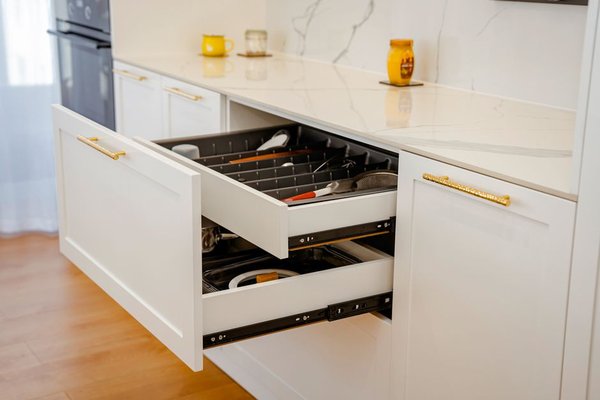
To babyproof kitchen drawers, begin with cutlery, knives, graters, foil cutters, utensils with pointed ends, and any small removable parts. Move sharp implements to a more secure location instead of assuming a simple drawer catch is sufficient. Lock the under-sink cabinet if it contains cleaning products, or preferably relocate those products to locked, higher storage.
For example, a family cooking dinner may open the utensil drawer repeatedly. A reliable internal lock on a safe-access drawer can be practical, while sharp knives live in a separately secured cabinet adults open less often. That arrangement reduces rushed moments when someone forgets to re-latch.
Bathroom and Laundry Area
Secure medicines, cosmetics, razors, mouthwash, cleaning liquids, and laundry products. Concentrated detergent packets pose particular poisoning risks. Keep them in original packaging behind secure storage, never in a low basket that a child can reach. Do not rely on a bathroom door remaining closed.
Living Room and Bedroom
Check media consoles for button batteries, remotes with unsecured battery compartments, cords, and small accessories. Bedroom drawers may hold medications, jewelry, or sewing supplies. Secure or relocate these items. Anchor dressers and other tip-prone furniture properly; drawer locks do not prevent furniture from tipping if a child climbs.
Garage, Utility Room, and Guest Spaces
Tools, paints, fuels, and garden chemicals need secure storage inaccessible to children. Review guest bedrooms and visiting relatives’ homes for easy-to-open bedside drawers and medicine bags. For a broader inspection, use a room-by-room babyproofing checklist and a guide to preventing furniture tip-overs.
Build a Routine That Keeps Locks Working
Every few weeks, check that adhesive has not lifted, screws have not loosened, and catches still engage. Retest after your child learns a new skill, such as pulling up, climbing, or copying adults. Review the storage plan using a household cleaners safety checklist rather than trusting that yesterday’s cabinet contents are unchanged.
Frequently Asked Questions
When should I start babyproofing cabinets and drawers?
Prepare before your baby starts crawling or pulling up, rather than waiting until they open their first drawer. Children develop differently, and reach expands quickly once climbing begins.
Are magnetic locks better than adhesive straps?
Neither is universally better. Magnetic locks can keep fronts fully closed and look discreet; straps accommodate certain awkward shapes. The safer choice is a compatible, well-installed lock that stays engaged during regular testing.
Do I need drawer locks for babies on every drawer?
Prioritize drawers with hazardous items and drawers that create access or injury risks. You may leave carefully checked, low-risk storage available for supervised exploration, but reassess it as your child grows.
Can a child eventually open a safety latch?
Yes. Locks can fail, be installed incorrectly, or eventually be defeated by a determined child. Keep high-risk items in secure, inaccessible storage and continue supervising even after fitting childproof cabinets.
Make the Safest Choice the Easiest Habit
Successful babyproofing does not mean buying the largest pack of locks. It means identifying dangerous contents, moving them to safer storage, matching hardware to the furniture, and checking that every latch actually closes. Start with one room today, test each secured cabinet, and revisit the setup whenever your child’s abilities or household routines change.