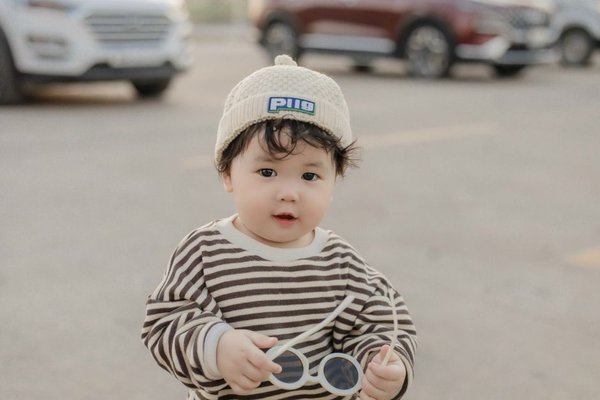
A hat labelled “0–3 months” can look perfect on the shelf and still slip over a baby’s eyes or leave an uncomfortable mark. That is because baby hat sizes do not follow age as neatly as clothing labels suggest. Head circumference is the best starting point, followed by a check of the hat’s band, crown and fabric.
This baby hat size chart explains common labels, how to take a reliable baby head measurement and what to do when a child’s measurement falls between sizes. You only need a flexible measuring tape and a little patience.
Baby hat size chart by head circumference
The ranges below illustrate sizing used by baby-hat brands, including Reima’s double-size system. They are not medical growth standards or a universal chart. Manufacturers may assign different age labels to the same circumference, so check the chart for the specific hat you want.
Newborn or NB: This label varies considerably. Some newborn hats are smaller than the first 36 cm size, while other brands use a wider fit. Check the product’s stated measurement.
0–3 months: Approximately 36–38 cm (14.2–15.0 inches) in one common sizing system.
3–6 months: Approximately 40–42 cm (15.7–16.5 inches).
6–12 months: Approximately 44–46 cm (17.3–18.1 inches).
12–24 months: Check the individual product. Some ranges move to around 48–50 cm (18.9–19.7 inches), but may label that size “1–4 years” instead.
These are examples of available infant hat sizes, not claims about what every baby of that age should measure. If your baby’s head is 42 cm, that number matters more than whether they have just turned five months old. Always consider the brand’s stated fit and the material’s stretch.
How to measure your baby’s head for a hat
Find the widest part
Use a soft, non-stretch measuring tape. Position it just above the eyebrows, pass it above both ears and bring it around the most prominent part of the back of the head. This follows the measurement landmarks described by the US Centers for Disease Control and Prevention.
Keep the tape flat, without twists, and snug enough to touch the hair without digging into the skin. Measure the head itself, not over an existing hat or headband. If your baby turns away, wait rather than tightening the tape to finish.
Repeat and record
Measure several times, repositioning the tape if it slips. If readings differ slightly, use the largest reliable circumference rather than a reading taken at the wrong angle. Write down the number and date; last month’s measurement may already be outdated.
No measuring tape? Gently wrap a non-stretch piece of string along the same path, mark where its ends meet and measure that length against a ruler. Elastic string can give misleading results.
Match the measurement to the actual hat
Start with your baby’s current circumference and compare it with the product’s sizing guide. An age label such as 0–6M might describe a forgiving knit beanie, whereas a structured sun hat marked 3–6M could have a firmer band. Neither label tells the whole story.
Imagine a six-month-old whose head measures 43 cm. An infant hat size chart offers a 40–42 cm knit and a 44–46 cm option. Before ordering, check whether the smaller hat’s stated stretch range includes 43 cm. If not, consider the next size, but make sure it cannot slide down over the eyes. Buying oversized headwear simply for growing room is not a safe shortcut.
Online descriptions may say “head circumference,” “fits head size” or “sizing range.” Those numbers are more helpful than flat hat width, which does not always represent the head size the product accommodates.
How to tell whether a baby hat fits
A daytime hat should sit securely without squeezing. Its band should stay comfortably above the eyebrows, with enough crown depth to remain in place. While supervising your baby, gently check whether the hat shifts when their head moves.
Warning signs include a band leaving persistent deep marks, a crown riding upward and a brim dropping over the eyes. Mild temporary impressions are not always a problem, but rubbing, obvious pressure or repeated discomfort mean it is time to reassess.
Why the fabric matters
Stretchy jersey and rib-knit styles may fit several head measurements, although seams can still feel tight. Woven cotton hats often have much less give. A useful baby clothing size guide can help with outfits, but always measure headwear separately; babies do not necessarily wear the same age size in every category.
Choose a hat for the conditions too. A well-fitting, brimmed sun hat adds outdoor coverage alongside shade and appropriate sun protection. In chilly weather, a warmer hat may be useful outdoors, but layers should be adjusted if your baby gets hot.
Newborn hats and safe everyday use
Newborn heads vary, and their shape can change after birth. This makes any single newborn hat size unreliable. If a gift labelled NB presses against the forehead, do not assume the baby must fit it because of their age.
Hat advice is for appropriate, supervised daytime wear, not sleep. The American Academy of Pediatrics advises against hats on babies indoors, except in special settings such as the first hours after birth or neonatal intensive care. Hats can contribute to overheating. Remove them before naps and bedtime so the head and face remain uncovered.
Outdoors, watch for sweating, flushed skin or a hot chest, and adjust clothing for the temperature. A guide to dressing a baby for different temperatures is useful when deciding how many layers are necessary.
Frequently asked questions
Should I use age or head circumference to choose a hat?
Use head circumference first. Age labels are helpful starting points but vary by manufacturer, fabric and style. Compare your baby’s measurement against the product’s actual fit range.
What if my baby’s measurement falls between two sizes?
Check the manufacturer’s stretch guidance and try both sizes if possible. The better fit stays above the eyes without squeezing. Do not choose a loose hat purely to allow growth.
How often should I remeasure for hats?
Measure before purchasing a new hat, especially in the first year when growth is rapid. Measure again if an existing hat begins riding up or leaving uncomfortable marks. Medical head measurements at routine checkups serve a separate purpose.
Can my baby wear a hat while sleeping?
No. For routine sleep, remove the hat and keep the baby’s head uncovered to avoid overheating. Follow your pediatric care team’s advice if your child has special medical needs.
A better fit starts with one measurement
Measure around the widest part of the head, check the exact brand chart and assess the hat’s comfort and stability. That simple routine beats guessing from age alone. Remeasure as your baby grows, and keep hats for suitable awake-time situations. For other items, an accessories sizing guide can help you check fit beyond headwear.