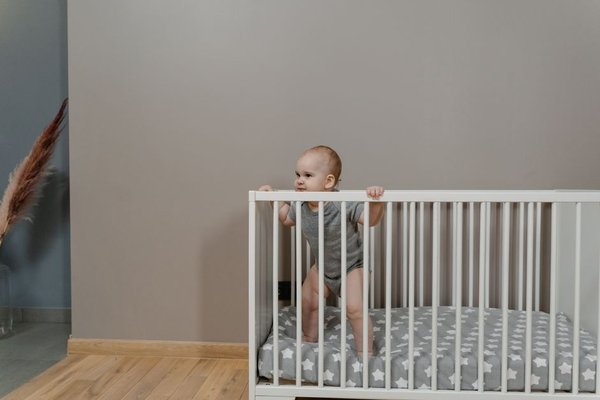
Wondering when to move baby to crib? The answer depends less on a birthday than on your baby’s development, the limits of their current sleep space, and your family’s routine. A crib can be suitable from birth when it meets safety standards. You do not need to wait until your baby sleeps through the night or learns to settle independently.
For families using a bassinet, the decision often comes when their baby approaches its weight or developmental limits. Others choose a crib earlier for more space. The goal is to move before the current sleep setup becomes unsafe, then make the change feel familiar.
When Is the Right Time to Move Baby to a Crib?
There is no universal age for a crib transition. Some babies sleep in a crib from their first night home. Others move from a bassinet during the first several months. Many parents consider the change around three to six months, but that is a planning window, not a safety deadline.
The bassinet manufacturer’s instructions matter more than an average age. Check its maximum weight and developmental stopping points. If your baby reaches either limit, stop using it even if they still look comfortable.
Moving into a crib differs from moving into a separate room. The American Academy of Pediatrics recommends babies sleep in their parents’ room, on a separate safe surface, for at least the first six months. You can place the crib in your bedroom and make the crib sleep transition without changing rooms.
Signs Your Baby May Be Ready—or Need to Move Now
Your Baby Has Reached a Bassinet Limit
Read the product label and manual instead of judging by appearance. Bassinets have weight limits and developmental restrictions. Some require you to stop use when rolling begins; others specify pushing up on hands and knees or another milestone. Follow whichever stopping condition your model lists first.
Your Baby Is Becoming More Mobile
Rolling attempts, pushing up, and increasingly active movements are reasons to reassess a small sleep space promptly. Do not wait for a fall or a successful full roll before checking the instructions. If the bassinet no longer meets its safe-use conditions, switch to an appropriate crib.
Your Family Needs a More Practical Setup
A cramped arrangement or difficult nighttime access may make a crib more practical. More space does not guarantee longer sleep, however. Developmental changes and feeding needs can still cause wake-ups after the move.
Prepare the Crib for Safe Sleep First
Before your first night with baby sleeping in crib, check that the crib meets safety standards, has all its hardware, and has not been recalled. Use a firm, flat mattress designed for that crib, covered only by a snug fitted sheet.
Keep the space empty: no pillows, loose blankets, bumper pads, stuffed animals, positioners, or extra padding. Always place your baby on their back to start sleep. If they independently roll both ways, you generally do not need to reposition them after they roll, but the crib must stay clear.
Use suitable sleep clothing or a correctly sized, non-weighted wearable blanket. Stop swaddling as soon as your baby shows signs of trying to roll. Lower the crib mattress according to its instructions as your baby grows and begins to pull up.
Position the crib away from curtain cords, monitor wires, and anything your baby could reach. A monitor can offer convenience, but it cannot make an unsafe sleep setup safe.
A Gentle Crib Transition Plan
Keep Familiar Bedtime Cues
Start with the routine your baby knows: perhaps a feed, clean diaper, dim lights, a short song, and a calm goodnight. Repeating the sequence helps the new sleep surface become part of an existing pattern.
Choose a Practical First Sleep
If the old sleep space remains safe, try one crib nap or the first nighttime stretch, then gradually increase use. But if the bassinet’s limit has been reached, switch immediately; do not use an outgrown bassinet for extra practice nights.
Imagine your four-month-old begins pushing up and the bassinet manual says to stop at that stage. Move the crib into your bedroom that day. Follow the usual bedtime routine, place baby on their back, and offer reassurance if they fuss. You need not postpone the safety change until they master independent sleep.
Offer Comfort Without Adding Hazards
Soothe your baby with your voice, a gentle touch while you are awake, or briefly picking them up and putting them back down on their back. Avoid pillows or soft objects meant to recreate a bassinet’s enclosed feeling.
Some babies accept the crib quickly; others wake more often initially. Respond to hunger and discomfort as usual. A crib transition does not require stopping night feeds or starting sleep training.
Common Mistakes That Make the Change Harder
Changing the sleep space, feeding schedule, bedtime, and settling method simultaneously can overwhelm everyone. When possible, change the sleep surface first and preserve the routine.
Another mistake is adding cushioning because the crib seems large. Babies need a firm, uncluttered surface, not padding. Avoid swings, loungers, and car seats as routine sleep spaces. If your baby falls asleep in one, transfer them to an appropriate flat surface as soon as practical.
Finally, do not assume every wake-up means the transition failed. Teething, illness, and ordinary sleep development may coincide with the move. Never return your baby to a bassinet they have outgrown.
Frequently Asked Questions
Can a Newborn Sleep in a Crib?
Yes. A newborn can sleep in a safety-compliant crib with a firm, flat mattress and fitted sheet. Keep the crib in your room for at least the first six months, and place your newborn on their back for sleep.
Should I Wait Until My Baby Rolls Over?
No. Check your bassinet’s stopping rules and move before your baby exceeds them. If the instructions require stopping at signs of rolling, do not wait for a complete roll.
What If My Baby Cries Every Time I Put Them Down?
Check for hunger, illness, and discomfort. Keep the bedtime routine steady and offer patient reassurance. If crying is persistent, unusually intense, or accompanied by concerning symptoms, consult your pediatrician.
Does the Crib Have to Go in the Nursery?
No. Crib use and sleeping in another room are different decisions. Room sharing without bed sharing is recommended for at least the first six months, so placing the crib in your bedroom may be simplest.
Making the Move With Confidence
The best answer to when to move baby to crib is to follow the current sleep product’s safety limits, not a fixed age or a promise of better sleep. Prepare a safe crib, preserve familiar bedtime cues, and allow time to adjust while continuing to respond to your baby’s needs.